Retaining wall planning resources
Practical guides to plan a retaining wall project before you ever take a quote, written for San Diego hillside lots and soils.
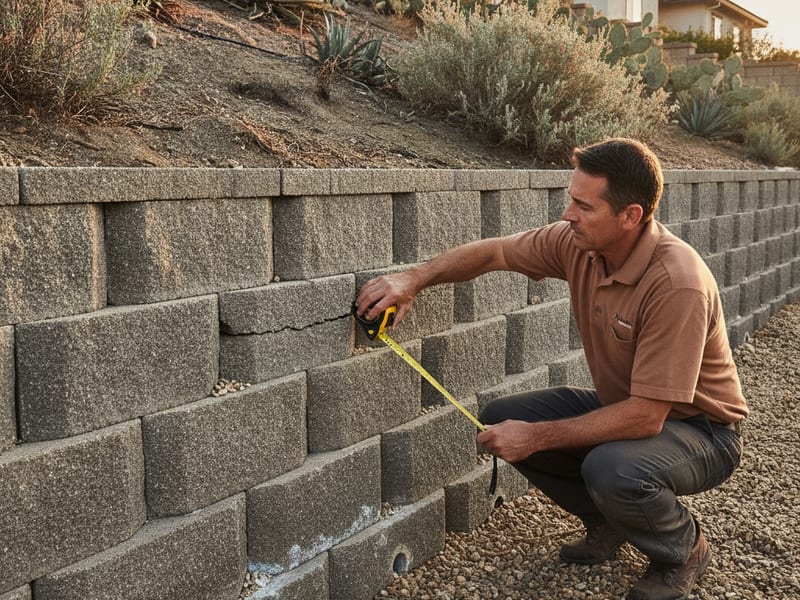
Retaining wall planning guides
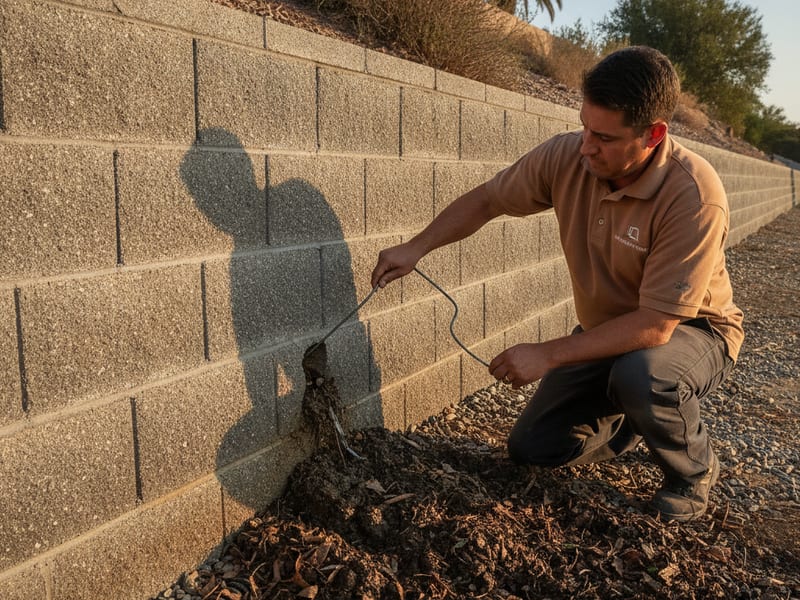
Clear blocked weep holes in a retaining wall
Blocked weep holes are one of the most common causes of hydrostatic pressure buildup behind retaining walls. Clearing them is a 30-minute task that can extend wall life significantly.
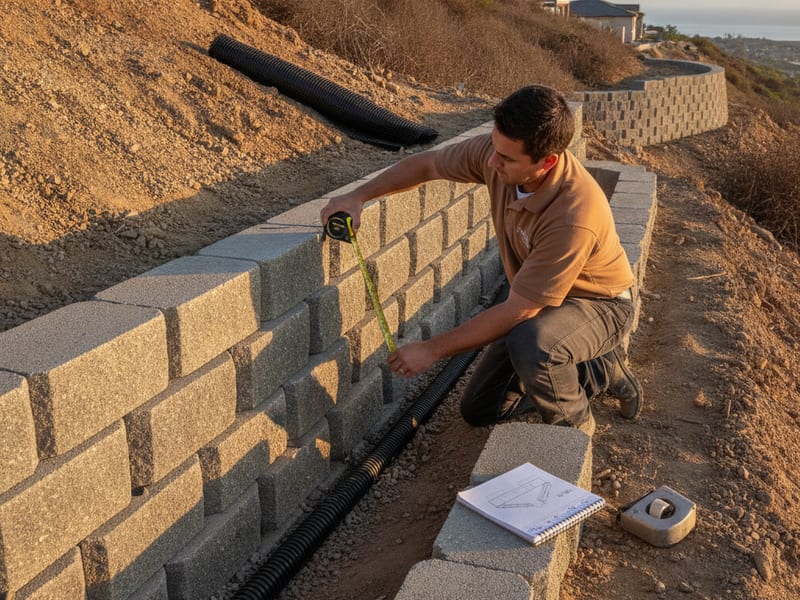
Measure wall height for permit purposes
Whether your wall needs a permit depends on its measured height, not how tall it looks from the yard. Learning to measure correctly takes 10 minutes and may determine whether your project requires engineering.
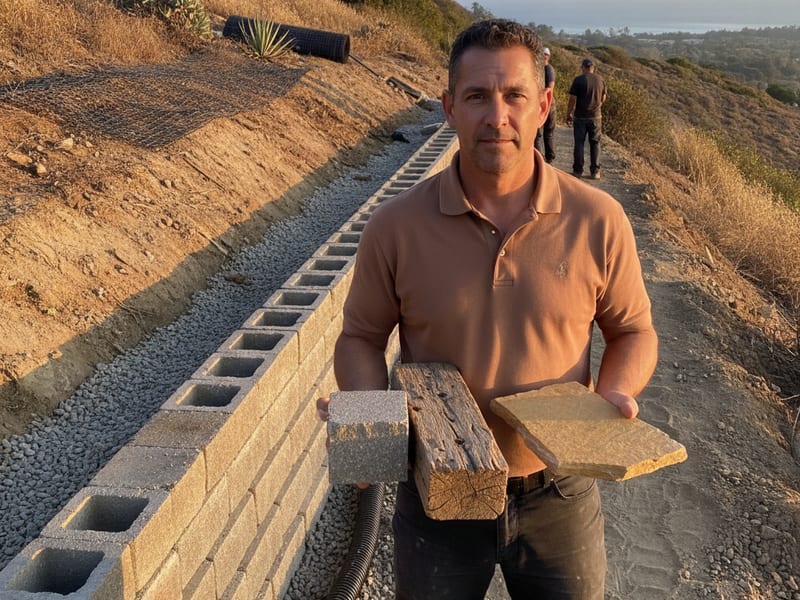
Identify your retaining wall material
Knowing what your wall is built from helps you get an accurate quote and understand your repair or replacement options. Most wall materials are identifiable from a 5-minute walkthrough.
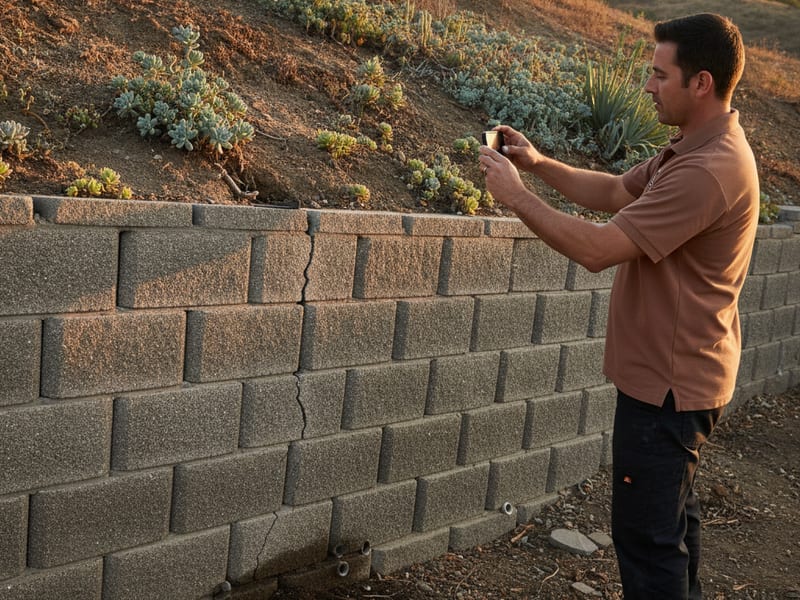
Document wall damage for contractor quotes
A few photos and measurements taken before you call a contractor or file an insurance claim can speed up the estimate process and give you documentation of the condition at a specific date.
When should you stop and call a professional?
Six signs that the problem is past DIY. Stop digging and pick up the phone. A wall showing these signs turns cheap repairs into expensive rebuilds.
- The wall leans more than an inch off vertical
A visible lean means the soil behind the wall is winning. Leaning walls rarely stabilize on their own and can fail suddenly after heavy rain.
- Horizontal or stair-step cracks across the face
Cracks that run sideways or step through block joints signal pressure from behind, not surface wear. That is a structural problem, not a cosmetic one.
- Water seeps through the face days after rain
Prolonged seepage means the drainage behind the wall is clogged or missing. Trapped water adds hydrostatic pressure and is the top cause of wall failure.
- Soil settles or sinks above the wall
A dip or trench forming behind the top of the wall means backfill is migrating out. The wall is losing the material that holds it in place.
- Blocks bulge, rotate, or push out of line
A bulging section carries concentrated load. Rebuilding one failed section early costs far less than replacing a collapsed wall and regrading the slope.
- The wall is over four feet or supports a structure
Walls over four feet, or any wall holding up a driveway, patio, or building pad, need engineering. DIY repairs on these can create code violations and liability.
Ready to get a free on-site retaining wall estimate
If the guide didn't solve it, the right crew can. One call gets you a free on-site estimate anywhere in San Diego County.